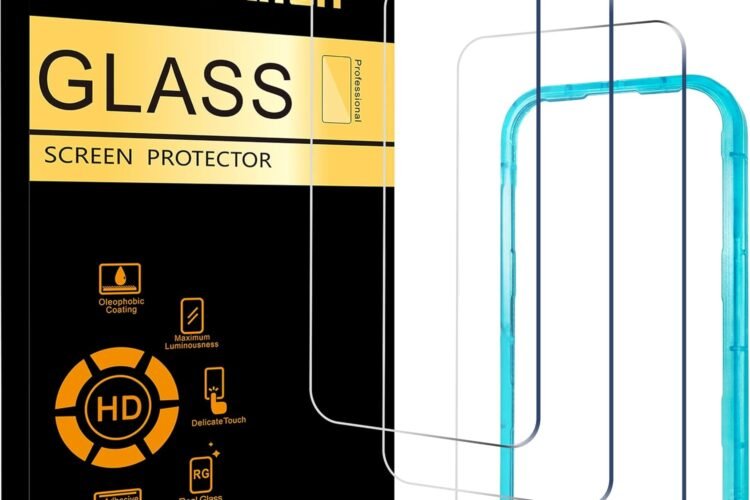
A Practical Guide to the Ailun 3 Pack Screen Protector for iPhone 18 Pro and iPhone 17 Pro
Smartphone screens have become remarkably durable over the years, yet the reality of daily use—keys in pockets, accidental drops, the occasional face-down slide across a table—means that even the toughest glass can pick up micro-abrasions or suffer a catastrophic crack. For anyone carrying a recent iPhone, the question isn’t usually whether the screen is strong; it’s whether a relatively small additional layer of protection is worth the effort. This guide examines the Ailun 3 Pack Screen Protector for the iPhone 18 Pro and iPhone 17 Pro, breaking down what the product includes, how it fits into different routines, and what to keep in mind before deciding whether it suits your needs.
Understanding the Product at a Glance
The Ailun 3 Pack Screen Protector is designed specifically for the 6.3-inch display shared by the iPhone 18 Pro and iPhone 17 Pro. It arrives as a set of three tempered glass films, each measuring 0.33mm in thickness, along with an installation frame and a small kit of cleaning accessories. The package is intended to cover the essentials of screen protection without unnecessary complexity, and the inclusion of three protectors acknowledges a simple truth: installation mistakes happen, and having spares on hand reduces the frustration of needing to order a replacement immediately.
The core specifications are straightforward. The glass is rated for high-definition clarity, with Ailun claiming 99.99% touch-screen accuracy and a hydrophobic and oleophobic coating designed to resist fingerprints and oil residue. The protector is advertised as compatible with the Dynamic Island and case-friendly, meaning it is cut to leave room for the sensor array and should not interfere with most phone cases. Crucially, it is not compatible with the larger iPhone 18 Pro Max or iPhone 17 Pro Max, nor with the standard iPhone 17 or iPhone Air models—a detail worth double-checking before purchase, as the 6.3-inch size applies to specific models only.
Key Features and What They Mean in Practice
Tempered Glass Construction
Tempered glass remains the most popular material for screen protectors, and for good reason. It offers a balance of scratch resistance, impact absorption, and tactile feel that plastic films struggle to match. The Ailun protector uses a 0.33mm sheet, which falls into the thinner end of the tempered glass spectrum. Thinner glass tends to preserve touch sensitivity better than thicker alternatives, reducing the likelihood that swipes and taps will feel dampened or delayed. The trade-off is that very thin glass may offer slightly less impact protection than a thicker sheet, though the difference in everyday scenarios is often marginal.
One important nuance about tempered glass protectors in general: they are designed to absorb impact by cracking, effectively sacrificing themselves to protect the display beneath. A cracked protector is not necessarily a sign of poor quality; in many cases, it means the glass did its job.
Installation Frame and Accessories
Perhaps the most practical feature of this package is the inclusion of an installation frame. Aligning a screen protector by hand is notoriously finicky, and a misaligned protector can leave an edge exposed or overlap the case in an awkward way. The frame acts as a guide, positioning the glass correctly before the adhesive makes contact. Ailun also includes guide stickers, wet and dry wipes, and dust absorbers—tools that address the two most common installation problems: trapped dust particles and air bubbles.
For anyone who has installed a screen protector before, these accessories will feel familiar. For first-timers, they reduce the learning curve considerably. The frame is not a reusable, premium alignment system like some higher-end options, but it serves its purpose for the three protectors included in the pack.
Oleophobic and Hydrophobic Coating
The coating on the glass is designed to repel sweat and oils from your fingers, which translates to fewer smudges and a screen that stays clearer between cleanings. Over time, this coating will wear down with use, as is true of virtually all coated screen protectors. When the coating degrades, fingerprints become more visible, and cleaning becomes more frequent. This is one reason a multi-pack makes sense: eventually, the protector will need replacing, not because the glass has failed structurally but because the surface no longer repels oil effectively.
Case-Friendly Design and Sensor Protection
The protector is cut to accommodate the Dynamic Island and the sensor array, meaning it should not obstruct the front-facing camera or the sensors used for Face ID. The “case-friendly” designation indicates that the edges are shaped to fit within the tolerances of most phone cases, avoiding the frustrating scenario where a case lifts the edge of the protector and creates a bubble that never quite settles. It is worth noting, however, that case fit can vary. A case with an unusually tight lip or a raised bezel that sits very close to the screen edge may still interfere.
How the Screen Protector Fits Into Daily Use
For the Commuter and Everyday Carrier
A screen protector is most valuable in the small, unremarkable moments of the day: sliding the phone into a bag alongside keys, setting it face-down on a café table, or pulling it from a pocket where a bit of grit has accumulated. The Ailun protector adds a layer that takes the brunt of these micro-contacts. The oleophobic coating also helps during commutes, when fingers are often slightly oily or damp, keeping the screen readable without constant wiping.
For the Frequent Traveler
Airports and train stations are environments where phones get handled more than usual—placed in security bins, balanced on luggage handles, passed between hands. A tempered glass protector provides a degree of reassurance that a scratch or scuff will land on the protector rather than the display. The three-pack format is particularly relevant here: if a protector cracks during a trip, having a spare means you are not forced to search for a replacement in an unfamiliar city or pay a premium at an airport kiosk.
For the Household With Multiple Devices
If more than one person in a household carries an iPhone 17 Pro or iPhone 18 Pro, the three-pack offers a practical way to protect several devices at once. This is also relevant for families where a phone is shared or passed down, or for small teams that issue company phones. Buying a single pack that covers multiple devices can be more economical than purchasing individual protectors, though it does require that all devices share the same 6.3-inch screen size.
For the Cautious First-Time Owner
There is a particular group of users for whom a screen protector offers peace of mind beyond the physical protection: those who have never used a case or protector before and feel anxious about damaging a new phone. For this group, the Ailun pack is a low-stakes way to try screen protection. If the installation goes poorly, there are two more attempts in the box. If the protector interferes with a case or feels wrong, removing it is straightforward. The relatively low cost of entry makes it easier to experiment without a significant commitment.
Who This Product May Be Suitable For
The Ailun 3 Pack tends to appeal to a few broad categories of users.
Practical minimalists who want basic protection without paying for premium features like privacy filters or anti-glare coatings may find this pack meets their needs. It covers the fundamentals—scratch resistance, impact absorption, and oil resistance—without adding bulk or altering the visual experience of the screen.
Frequent installers and tinkerers who like to replace their protector every few months, or who have cracked one in the past and want spares on hand, will appreciate the multi-pack format. The cost per protector is generally lower than buying singles, and the installation frame makes repeat installations less tedious.
Budget-conscious buyers who are not looking for the thinnest possible glass or the most advanced coating may find the Ailun pack offers a reasonable balance. It is not positioned as a premium product, and the specifications reflect that, but it covers the essentials competently.
Owners of compatible models—specifically the iPhone 18 Pro and iPhone 17 Pro—are the only ones who can use this product. Anyone with a Pro Max, a standard iPhone 17, or an iPhone Air will need to look for a different size.
Important Things to Consider
Model Compatibility Is Narrow
The most important consideration is compatibility. This protector is cut for the 6.3-inch display shared by the iPhone 18 Pro and iPhone 17 Pro. It will not fit the iPhone 18 Pro Max, iPhone 17 Pro Max, iPhone 17, iPhone Air, or any older iPhone model. If you are unsure which model you have, checking the model number in the phone’s settings is a good first step. Screen protectors for the wrong model can cover sensors, fail to adhere properly, or leave edges exposed.
Installation Requires Care
Even with an installation frame, applying a screen protector is a task that benefits from patience. Dust is the primary enemy; a single particle trapped under the glass can create a visible bubble that cannot be pressed out. Working in a clean, well-lit space, washing hands, and using the included dust absorbers can improve the outcome. Some users find that installing a protector in a bathroom after running a hot shower—where steam helps settle airborne dust—reduces the chance of particles getting trapped.
Adhesive Quality and Edge Lifting
The adhesive used on screen protectors varies, and edge lifting is a common complaint across many brands, not just this one. A protector that lifts at the edges can collect dust and eventually peel off entirely. Case fit plays a role here: a case that presses against the protector’s edge can cause lifting over time. Choosing a case with a slightly recessed lip or one specifically noted as compatible with screen protectors can help mitigate this.
Coating Longevity
The oleophobic coating will wear off with use, typically within a few months for heavy users. When it does, the screen will attract more fingerprints and feel less smooth. Some users replace the protector at this point; others continue using it until it cracks or becomes visibly scratched. There is no right or wrong approach, but it is worth knowing that the coating is a wear item, not a permanent feature.
Clarity and Touch Sensitivity Trade-Offs
While the protector is advertised as offering high-definition clarity and 99.99% touch accuracy, any additional layer of glass has the potential to slightly alter the feel of the screen. Most users will not notice a difference, but those who are particularly sensitive to touch latency or who use the phone for precision tasks like drawing may want to evaluate whether the protector meets their standards. In most cases, a 0.33mm sheet is thin enough that the difference is negligible.
Not a Substitute for a Case
A screen protector guards the display, but it does not protect the back, sides, or camera lenses of the phone. For comprehensive protection, a case is still advisable. Some users pair a screen protector with a slim case to keep the overall profile of the phone manageable while still covering the essentials.
Comparing General Categories of Screen Protectors
Screen protectors fall into a few broad categories, each with its own strengths and trade-offs. Understanding these categories can help contextualize where the Ailun 3 Pack fits.
Tempered Glass vs. Plastic Film
Tempered glass, which is what this product uses, offers superior scratch resistance and a more natural feel than plastic film. It is also more effective at absorbing impact, though it is thicker and can crack under pressure. Plastic film protectors are thinner, cheaper, and less prone to cracking, but they scratch more easily and tend to feel less smooth. For most users, tempered glass is the preferred choice for a phone with a glass display.
Thin vs. Thick Glass
Glass protectors range from around 0.2mm to 0.5mm in thickness. Thinner glass preserves touch sensitivity and maintains a low profile, while thicker glass may offer marginally better impact protection. The Ailun protector at 0.33mm sits in the middle, leaning slightly toward the thinner end. This is a reasonable compromise for most users, though those who prioritize maximum impact protection may prefer a thicker option.
Standard vs. Privacy vs. Anti-Glare
Standard clear protectors, like this one, preserve the display’s brightness and color accuracy. Privacy protectors narrow the viewing angle so that only the person directly in front of the screen can see it, which is useful in crowded settings but can reduce brightness and make the screen harder to read at an angle. Anti-glare protectors reduce reflections but can give the screen a slightly matte, grainy appearance. Each type serves a different purpose, and the right choice depends on how and where you use your phone.
Single Packs vs. Multi-Packs
Single protectors are often slightly cheaper per unit but leave no room for installation errors or future replacements. Multi-packs like the Ailun 3 Pack cost more upfront but reduce the cost per protector and provide backups. For users who plan to keep their phone for several years or who have cracked a protector before, a multi-pack is often the more practical choice.
Frequently Asked Questions
Will this protector fit the iPhone 17 Pro Max or iPhone 18 Pro Max?
No. This protector is sized for the 6.3-inch display of the iPhone 18 Pro and iPhone 17 Pro. The Pro Max models have a larger display and require a different size.
Does the protector interfere with Face ID or the front camera?
The protector is cut to accommodate the Dynamic Island and the sensor array, so it should not obstruct Face ID or the front-facing camera. However, if the protector is misaligned during installation, it could partially cover a sensor. Using the installation frame helps prevent this.
Can I use this protector with a phone case?
The protector is described as case-friendly, meaning it is shaped to fit within the tolerances of most cases. That said, case fit varies, and a case with a very tight lip or a raised edge that sits close to the screen may cause the protector to lift. Choosing a case that is noted as compatible with screen protectors can reduce this risk.
How do I remove air bubbles after installation?
Small air bubbles often disappear on their own within a day or two as the adhesive settles. Larger bubbles may need to be gently pushed toward the nearest edge with a soft card or your finger. If a bubble persists and contains a dust particle, lifting the corner of the protector, removing the particle with a dust absorber, and pressing the protector back down may resolve it.
How often should I replace the protector?
There is no fixed schedule. Some users replace it when the oleophobic coating wears off and fingerprints become bothersome. Others wait until the protector cracks or becomes visibly scratched. If the protector cracks, replacing it promptly is advisable, as a cracked edge can collect debris and may eventually lift.
Does the protector affect touch sensitivity?
At 0.33mm, the glass is thin enough that most users will not notice a difference in touch sensitivity. The product is advertised as offering 99.99% touch-screen accuracy. Users who are particularly sensitive to touch latency may want to test the protector before committing to long-term use.
Is the protector difficult to install?
Installation requires some care, primarily to avoid trapping dust under the glass. The included installation frame, guide stickers, wipes, and dust absorbers make the process more manageable, but it is not a completely foolproof task. Working in a clean environment and following the instructions carefully improves the outcome.
Can the protector be removed without damaging the screen?
Yes. Tempered glass protectors are designed to be removable. Lifting a corner with a fingernail or a thin plastic tool and peeling the protector away is usually sufficient. Any adhesive residue can typically be wiped off with a soft cloth.
Does the protector cover the entire screen, including the curved edges?
The protector is cut to fit the flat portion of the display and accommodate the Dynamic Island. It may not extend fully to the curved edges of the screen, as is common with tempered glass protectors designed for phones with slightly curved displays. This is intentional to ensure case compatibility and proper adhesion.
What is included in the package?
The package includes three tempered glass screen protectors, an installation frame, guide stickers, wet and dry wipes, and dust absorbers. The exact contents may vary slightly, so checking the product listing is recommended.
Conclusion
The Ailun 3 Pack Screen Protector for the iPhone 18 Pro and iPhone 17 Pro is a practical option for anyone looking to add a basic layer of protection to a compatible device. It covers the essentials—tempered glass construction, an oleophobic coating, a case-friendly cut, and an installation frame—without venturing into premium territory or adding unnecessary features. The three-pack format is a thoughtful inclusion, acknowledging that installation is not always perfect on the first try and that protectors are wear items that eventually need replacing.
That said, it is not a one-size-fits-all solution. Compatibility is limited to two specific models, installation requires patience, and the coating will wear down over time. For users who want straightforward protection at a reasonable cost and who are comfortable with a bit of DIY installation, it may be a good fit. For those who prioritize maximum impact protection, premium alignment systems, or specialty features like privacy filtering, other options may be worth exploring.